
We all get excited when a new package arrives. But, how often do we regret buying it once we open it? It happens to the best of us.
Adding a 15-minute pause for product research before buying can save you money and stress. It’s about taking a moment to make sure your money is worth it. This way, you spend on things that really make your life better.
Learning simple online buying research gives you control over your shopping. It helps you make smarter choices. This way, you can live your best life with less hassle.
Key Takeaways
- Stop impulse spending by using a mandatory 15-minute cooling-off period.
- Protect your hard-earned money by verifying quality through quick checks.
- Avoid the common trap of buyer’s remorse with intentional habits.
- Focus on acquiring items that genuinely add value to your daily life.
- Master the art of efficient shopping to save time and reduce stress.
Why Product Research is Essential Before Making a Purchase
Before you click “checkout,” take a moment to think. This simple pause can save you from regret and money loss. Online shopping should not be a rush. Doing your homework is the best choice.
Researching products ensures your money is well-spent. You avoid buying items that don’t meet your expectations.
Understanding Product Quality
Quality isn’t just about price or brand. It’s about finding items that last and work as promised. By looking closely, you can tell the difference between a durable tool and a cheap imitation.
- Check the materials used in construction.
- Look for consistent performance reports from long-term owners.
- Avoid items with a history of frequent mechanical failures.
Avoiding Impulse Buys
We’ve all been tempted by “limited time offers.” These deals aim to trigger an instant buy. But, they often lead to disappointment.
By taking a short time to research, you can think clearly. This helps you separate real needs from fleeting wants. Most “must-have” items lose their appeal once the excitement wears off.
Making Informed Decisions
The goal is to spend wisely, aligning with your long-term goals. Whether saving for a trip or upgrading your office, every dollar matters. Making informed choices means you stop guessing and start investing in value.
Researching products boosts your confidence in your choices. You stop worrying about mistakes and enjoy items that truly enhance your life.
Quick Strategies for Effective Product Research
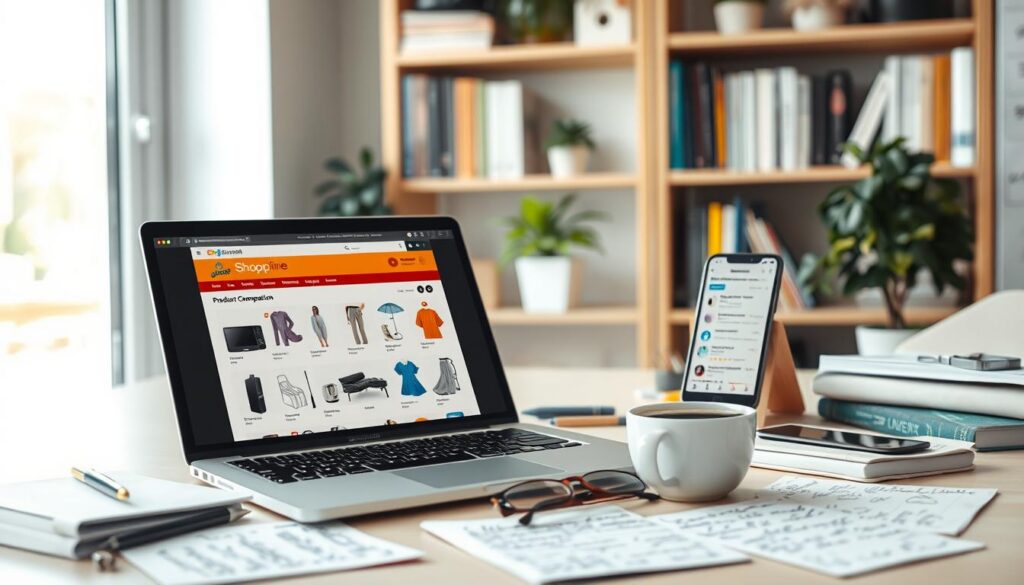
Good research isn’t about how long you spend on it. It’s about having the right plan. You don’t need to stare at screens for hours to buy smart. With a simple, easy-to-follow plan, you can do product research before buying with confidence and quickly.
Identify Your Needs
Before you start, think about what you really need. Make a simple shopping checklist to keep your focus. List three things you must have and two nice-to-haves.
This list helps you stay on track. It stops you from buying things you won’t use. Staying disciplined here saves you money.
Use Comparison Tools
After knowing what you need, compare products online efficiently. Don’t open many tabs. Use sites that compare products for you.
“An investment in knowledge pays the best interest.”
These tools show you specs, prices, and availability side by side. This way, you get the best deal without the hassle.
Read User Reviews
Good product comparison includes reading what others say. Look for common themes in feedback. If many people mention the same issue, it’s worth considering.
| Research Method | Primary Benefit | Time Required |
|---|---|---|
| Shopping Checklist | Prevents Impulse Buys | 2 Minutes |
| Comparison Tools | Visualizes Specs | 5 Minutes |
| User Reviews | Real-World Insight | 8 Minutes |
By spending just a few minutes on these steps, you become a smart shopper. Your purchases will be more satisfying, and your wallet will thank you.
How to Utilize Online Tools for Product Research
Today, shopping is easier thanks to digital tools. You don’t have to guess when you compare products online. With the right tools, your browser can help you a lot.
Popular Review Websites
It’s smart to check reviews before buying. Review sites help you avoid bad products. They tell you about performance, durability, and value.
- Consumer Reports: Offers unbiased, lab-tested data on appliances and cars.
- Wirecutter: Finds the best gear through rigorous testing.
- Trustpilot: Helps you see a retailer’s reputation before buying.
Browser Extensions for Price Tracking
Browser extensions can track prices for you. You don’t have to check prices every day. These tools help you avoid overpaying.
Extensions like Honey or CamelCamelCamel are great for shoppers. They track prices to help you spot deals. Installing them is easy and saves you money every time you shop.
Social Media Insights
Social media can give you honest feedback. Sites like Reddit, YouTube, and TikTok show how products work in real life. You can find unboxing videos and reviews that highlight issues.
Using social media for product comparison is helpful. Look for honest reviews and videos. It’s a good way to see a product’s quality before buying.
The Importance of Reading Product Specifications

Think of product specifications as the truth serum for every item you consider buying. Marketing photos might look perfect, but the technical details show how a product will really perform. Doing thorough online buying research means looking beyond the glossy surface to see what’s inside.
Key Features to Look For
When buying a blender, don’t just look at the color. Check the motor wattage and the material of the blades. These details tell you if the blender can handle your morning smoothie or if it will burn out soon.
Always put functional specifications first, not just how it looks. A beautiful design is nice, but it won’t help if it doesn’t meet your needs. When researching online, list the three most important features you need for your lifestyle.
Understanding Product Lifespan
You can guess how long a product will last by looking at the materials in the specs. Look for high-grade steel, reinforced plastics, or solid wood instead of cheap composites. These signs point to long-term durability.
Quality is not an act, it is a habit.
If a manufacturer doesn’t list the materials, that’s a warning sign. Reliable companies are proud to share what’s in their products. Buying durable items saves you money and stress in the long run.
Warranty and Support Information
A solid warranty is your safety net. Before buying, check if the company offers a clear, multi-year guarantee on parts and labor. This shows they stand behind their work and are committed to quality.
Use this table to evaluate if a product is worth your money:
Feature Category What to Look For Why It Matters Materials Metal vs. Plastic Determines overall lifespan Warranty 2+ Years Coverage Protects your investment Support Live Chat/Phone Ensures help is available Power/Output High Wattage/Capacity Ensures daily performance By following these steps in your online buying research, you protect your investment. You ensure you’re buying from a company that values its customers. Never overlook the importance of reading the fine print before you buy.
Evaluating Seller Reputation
Your online buying research isn’t complete until you vet the person behind the screen. It’s easy to get excited about a low price. But the seller is just as important as the product. A reliable retailer ensures your package arrives on time and keeps your money safe.
Importance of Trustworthy Retailers
Buying from a reputable source is like having a safety net. Established retailers have a reputation to protect. This means they are more likely to solve problems if something goes wrong.
When you buy from trusted platforms or well-known stores, you lower the risk of getting fake goods or dealing with shipping issues.
Identifying Red Flags
Always be cautious for common warning signs. If a website has broken links, poor grammar, or asks for payment through unusual methods like wire transfers, stay away. These are signs of a scam site that wants your data more than your business.
Another red flag is a seller who won’t give clear contact information. If you can’t find a physical address or a working customer service email, it’s likely an unreliable entity. Trust your gut; if a deal seems too good to be true, it probably is.
Utilizing Ratings and Feedback
Digging into seller ratings is key to your online buying research. Don’t just look at the star count; read the actual comments left by previous customers. Look for patterns in shipping speed, packaging quality, and return policies.
If you see many complaints about unresponsive support, it’s a major warning sign. On the other hand, a seller with consistent, detailed positive feedback is usually a safe choice. By taking these extra minutes to check the seller, you ensure a smoother shopping experience.
Making the Most of User Reviews
Let’s explore how to use endless customer comments as a reliable guide. User reviews are a goldmine of information, but they can be overwhelming. You must sift through the noise to uncover the truth about what you’re buying.
Differentiating Between Fake and Genuine Reviews
Not every five-star rating is well-deserved, and not every one-star review is fair. Be skeptical of reviews that sound like marketing or use generic phrases like “best product ever” without reason. A sudden surge in positive reviews is a warning sign of possible manipulation.
Real reviews share specific details about the user’s experience. They mention how the product fits into their daily life or any quirks they found. If a reviewer talks about both the good and the bad, they’re likely sharing a valuable perspective.
“The truth is rarely pure and never simple, especially when it comes to online feedback.”
Spotting Trends in Feedback
Instead of focusing on a single bad review, look for recurring themes in many reviews. If several people mention a zipper breaking after a month, it’s likely a design flaw. Patterns help you predict an item’s quality.
Don’t get caught up in complaints about shipping or packaging. Focus on feedback about the functionality and durability of the product. This helps you see the bigger picture, not just one-off issues.
Utilizing Customer Photos and Videos
Professional photos make everything look perfect, but they don’t always tell the whole story. Customer-uploaded photos and videos are the ultimate reality check for any purchase. They show the true color, scale, and texture of an item in a real home setting.
Seeing a video of someone using the product gives you a better sense of its size and usability. Always prioritize these user-generated visuals over polished marketing images. They offer the honest, unfiltered look you need to make a confident choice.
Analyzing Product Pricing and Deals
Prices online change often. They adjust based on demand, how much they have, and what you look at. When you compare products online, you can see beyond the first price.
Keeping an Eye on Discounts
Looking for deals is more than waiting for sales. Sign up for newsletters from your favorite brands for special codes. Pro tip: use a different email for these to keep your main one clean.
Browser extensions can also save you money. They look for coupons at checkout, so you always get the best price. It’s easy and keeps more cash in your wallet.
Understanding Pricing History
A “sale” might not be a real deal if prices were high before. Use price-tracking websites to see an item’s price history. These tools show the highs and lows over the last year.
Looking at these charts helps you know if a price is good or not. This way, you can compare products online with confidence. You’ll quickly spot fake discounts.
Knowing When to Buy
Timing is key for big buys. Electronics and home goods often go on sale in certain months. Waiting for these times usually means better prices.
Don’t rush to buy. If prices are going down, it’s smart to wait a bit. Being patient can save you money.
| Method | Best For | Effort Level |
|---|---|---|
| Price Trackers | Historical Data | Low |
| Coupon Extensions | Instant Savings | Very Low |
| Email Alerts | Flash Sales | Medium |
| Manual Monitoring | Niche Items | High |
Best Practices for Researching High-Value Items
When you’re ready to spend a lot, you need to step up your research. The stakes are high, and just comparing products might not be enough. You want to make sure your money is worth it.
Make sure your money is an investment, not just a fancy purchase. Let’s look at how to check those big-ticket items carefully.
Luxury Goods Research Tactics
When buying luxury items, look at the materials and the brand’s durability. Don’t get caught up in marketing or the brand’s status.
Check if the item’s value stays the same over time. A good product comparison can show if you’re paying for quality or just a trend.
Tech Gadgets: What to Consider
Tech changes fast, so look beyond new features. Make sure the software will still work in a year.
Read forums to learn about common problems. A detailed product comparison can help you find a good deal without sacrificing quality.
Home Appliances: Prioritizing Features
Appliances should make your life easier. Look at energy efficiency ratings and if you can get local repairs.
Don’t pay for features you won’t use. A smart product comparison will show you the best value for your needs.
Simplifying Your Product Research Process
Shopping can be a breeze without spending your whole weekend on research. We aim to make your shopping experience easier. It should never feel like a job, so let’s keep it simple and quick.
Creating a Research Checklist
Staying focused is key. Use a shopping checklist before you start looking. List the three most important features you need. This helps you avoid getting sidetracked by marketing that doesn’t solve your problem.
Make your list easy to access on your phone. When you find a product that fits your needs, mark it off and move on. This disciplined approach ensures you only spend money on what you really want.
Leveraging Online Communities
Real people’s opinions can be invaluable. Reddit and enthusiast forums offer honest feedback. You can find answers to questions that product pages often skip.
But, don’t just take one person’s opinion. Look for common themes in comments. This community insight is a great tool for smart shoppers.
Setting a Time Limit: Staying Efficient
The 15-minute rule is key to staying productive. Set a timer for exactly fifteen minutes to research a product. This strict time limit helps you focus on the most important information.
If you can’t find enough reasons to buy in that time, it’s a sign to keep looking. Knowing when to stop researching and make a decision is what makes you efficient.
| Research Method | Time Required | Primary Benefit |
|---|---|---|
| Using a shopping checklist | 2 Minutes | Keeps you focused |
| Checking online forums | 8 Minutes | Real-world insights |
| Price history tracking | 5 Minutes | Ensures best value |
Conclusion: Empowering Your Purchasing Decisions
You now have the power to make every purchase a smart choice. By changing how you shop, you control your money and your life.
We aim to provide top-quality products for your daily needs. A shopping checklist keeps you focused on what’s truly valuable for your home.
Better Choices for Daily Life
Making small changes in shopping can lead to big benefits. Choosing durable and useful items saves you money on things that don’t last.
Balancing Quality and Cost
Finding the right balance between price and quality gets easier with time. Use your checklist to find affordable, reliable brands.
Building a Research Mindset
Start using these habits today to make your life simpler. You should feel confident about every item you bring home.